
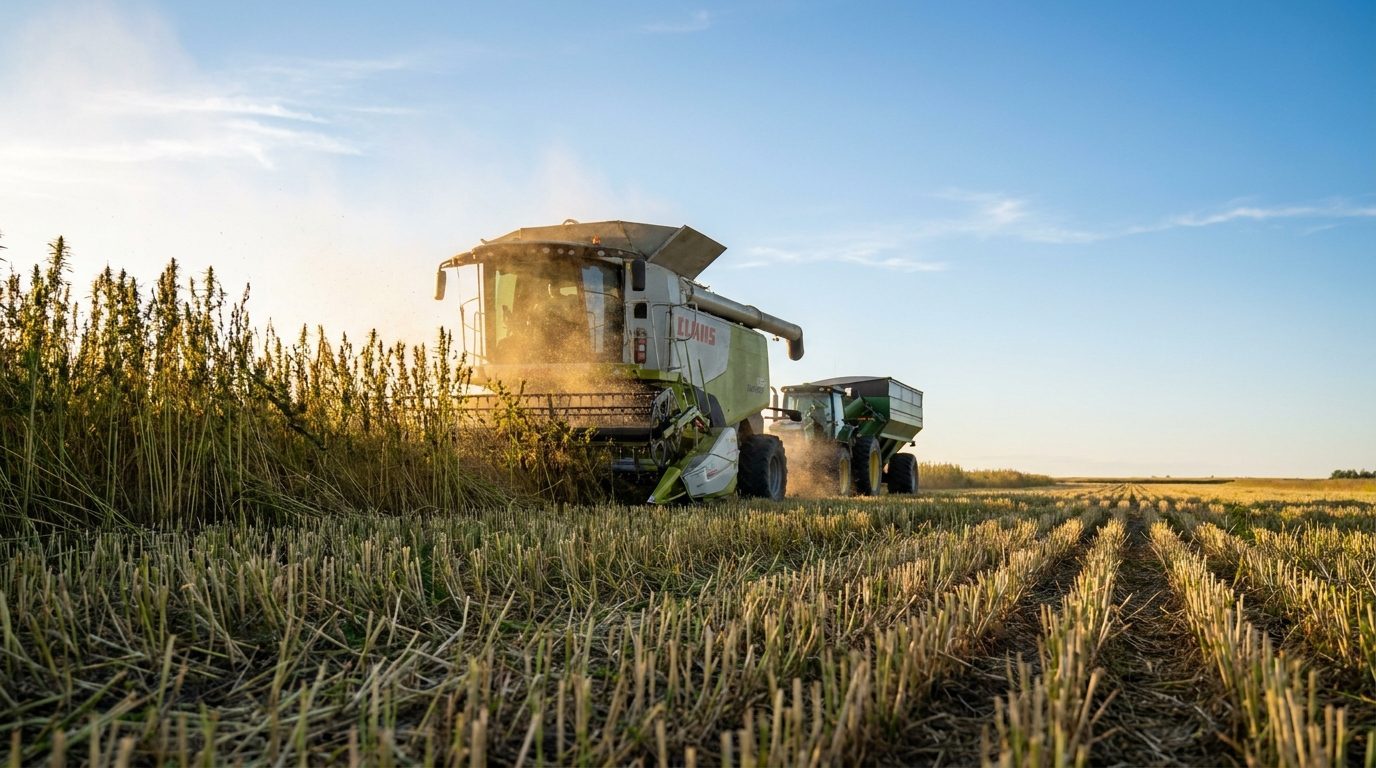
Hemp harvest is a narrow window of decisions. Grain growers watch seed moisture by the day, fibre growers watch stalk colour, and dual-purpose growers try to time both at once. Here is how the crop actually comes off a Canadian field.
Grain harvest
Hemp grain is combined standing, much like canola, when seed moisture falls toward the high teens. Waiting for perfectly dry seed risks shattering losses and bird pressure; harvesting wet means immediate aeration and drying, because hemp seed heats quickly in the bin and heat ruins both oil quality and germination. Most growers describe hemp grain as a crop you harvest slightly early and dry deliberately.
Why the fibre wraps
Hemp stalks are famously hard on equipment: long bast fibres wrap around rotating parts. Growers run slower ground speeds, keep knives sharp, and accept that some wrapping is part of the deal. Purpose-built headers and aftermarket kits reduce the problem but rarely eliminate it.
Fibre harvest and retting
Fibre crops are cut and left in the field to ret: dew, rain, and microbes loosen the bond between bast and hurd over several weeks. The grower's skill is judging when retting is done; under-retted stalks resist processing, over-retted fibre loses strength. Once retted, stalks are baled dry and stored for the decorticator.
After the field
Grain moves to cleaning, then dehulling for hemp hearts or pressing for oil, with the press cake milled into protein and flour. Stalks move to decortication, separating bast from hurd. From one plant, two completely different supply chains begin, which is why so few companies handle both.